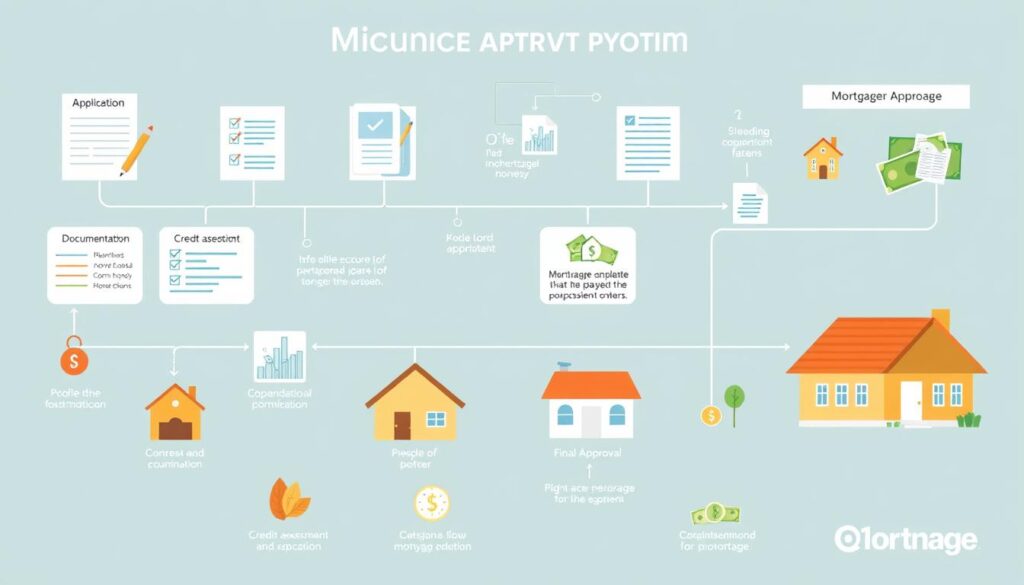
Understanding the Underwriting Process

Underwriting Process

The path to homeownership is embroiled with various financial assessments, chief among them being the underwriting process. At its core, this intricate process is the bedrock on which mortgage approval is built, scrutinizing every dimension of a potential borrower’s financial soundness. We take on the crucial task of conducting a comprehensive risk assessment, delving deep into applicants’ credit history, gauging their income against debts, and confirming the property’s value that they aim to finance. Our endeavor in the underwriting process encompasses far more than a cursory glance at numbers. We meticulously verify applicants’ identities, pin down financial stability, and cross-examine the home’s worth — all to cement the promise of a sound investment for lenders. The duration in which we engage in this premium calculation and risk analysis can span a few days to several weeks, contingent upon the intricacy of the applicant’s financial profile and our operational dexterity. Key Takeaways The underwriting process lays the groundwork for informed mortgage approval decisions. Understanding the applicant’s financial profile is pivotal to risk assessment. Accuracy in valuation is essential for precise premium calculation. Operational efficiency can significantly affect turnaround times in the underwriting process. Both manual and automated systems are used to ensure a thorough scrutiny. Identity verification and financial stability are crucial components evaluated by underwriters. The Role of Underwriting in Mortgage Approval Underwriting forms the backbone of the mortgage approval process, combining meticulous review and analysis of the applicant’s financial health. By adhering to strict underwriting guidelines and eligibility criteria, underwriters ensure the financial stability of the banking system and compliance with wider economic policies. Defining the Underwriting Process The underwriting process involves a detailed credit evaluation of potential borrowers to determine their ability to repay the loan. It assesses various factors including income, assets, and credit history, aligning with broader policy issuance standards. This fundamental review protects the lender from potential losses, promoting a stable lending environment. Key Responsibilities of Mortgage Underwriters Central to the role of mortgage underwriters is setting standards that applicants must meet to be considered for a loan. These standards are meticulously crafted, evolving from comprehensive credit evaluations and risk assessments to form robust underwriting guidelines. The primary aim is to minimize financial risks while making homeownership accessible to eligible applicants. Assessing Credit History and Risk The credit history and risk assessment are critical in determining if the applicants meet the eligibility criteria set forth. This process involves in-depth reviews of credit scores, debt-to-income ratios, and overall financial behavior, forming a cornerstone of the policy issuance. Engaging in these practices not only secures the lender’s assets but also ensures that loans are granted to those who are most capable of fulfilling financial obligations, benefiting the entire banking ecosystem. Delving into the Underwriting Guidelines and Criteria At the core of mortgage underwriting lies the rigorous adherence to underwriting guidelines. These criteria not only ensure the financial viability of the loans but also uphold strict compliance standards that protect both the lender and the economy. Understanding and implementing these guidelines correctly is crucial for maintaining the stability of the financial system. Actuarial analysis plays a pivotal role in this process by evaluating the risk associated with loan applicants. These evaluations help in setting fair, balanced premiums for mortgage insurance, which is a safety net against defaults. Additionally, automated decisioning systems have become integral in streamlining the underwriting process, reducing errors, and improving the efficiency of making lending decisions. Component Description Impact on Underwriting Underwriting Guidelines Criteria set by entities like Fannie Mae and Freddie Mac Ensures loans meet national standards for quality and risk Actuarial Analysis Statistical assessment of risk in loan portfolios Helps in determining appropriate premiums for mortgage insurance Automated Decisioning Use of AI and ML to make lending decisions Increases precision and speed of loan approvals Compliance Adherence to legal and regulatory standards Prevents legal repercussions and assures investor confidence In today’s lending landscape, keeping up with evolving underwriting guidelines and the sophisticated tools that support them, such as automated decisioning, is essential. It ensures not only the expedience but also the integrity of the mortgage approval process. By upholding stringent compliance and leveraging in-depth actuarial analysis, we can safeguard the interests of all stakeholders in the lending ecosystem. The Underwriting Process: From Application to Decision Embarking on the journey of homeownership or property investment invariably involves the meticulous and crucial underwriting process. This multi-step procedure assesses eligibility criteria, determines appraisal values, and culminates in the comprehensive policy issuance. Our goal is to demystify each stage, ensuring clients are well-prepared and confident throughout their application. Initial Application and Preapproval Phase The first step in securing a mortgage begins with the initial application, where potential borrowers present their financial standing and personal details. This phase involves a critical review of eligibility criteria to estimate a preliminary loan amount the client might expect, setting the groundwork for further examination. Document Collection and Verification Following a tentative preapproval, we delve deeper into verification. By gathering essential documents such as W-2s, pay stubs, and bank statements, our team conducts a thorough verification of income, assets, and employment history. This rigorous scrutiny is vital to ascertain the applicant’s repayment capacity and overall financial health. Appraisal, Title Search, and Other Assessments An imperative component of the underwriting process is the appraisal of the property. This evaluation ensures the requested loan amount is in alignment with the property’s market value. As part of this comprehensive examination, we also conduct title searches to uncover any legal claims that might affect ownership rights. The combined findings from these assessments play a pivotal role in the final mortgage decision-making process. Successfully navigating these stages leads to the finalization of the loan through policy issuance, where conditions are established for a clear to close status. It’s a structured path designed to protect both the lender and borrower by ensuring all facets of the loan are thoroughly evaluated and compliant with regulatory standards. In summary, our professional commitment during the underwriting process ensures that each

Fill in the form below and one of our representatives will contact you.

Contact Information

(866) 688-9020 info@o1nemortgage.com

Opening Hours

Monday – Friday 9am-5pm 
Weekend – Closed

Address

1906 W Garvey Ave Suite 200 West Covina CA 91790